Key Takeaways
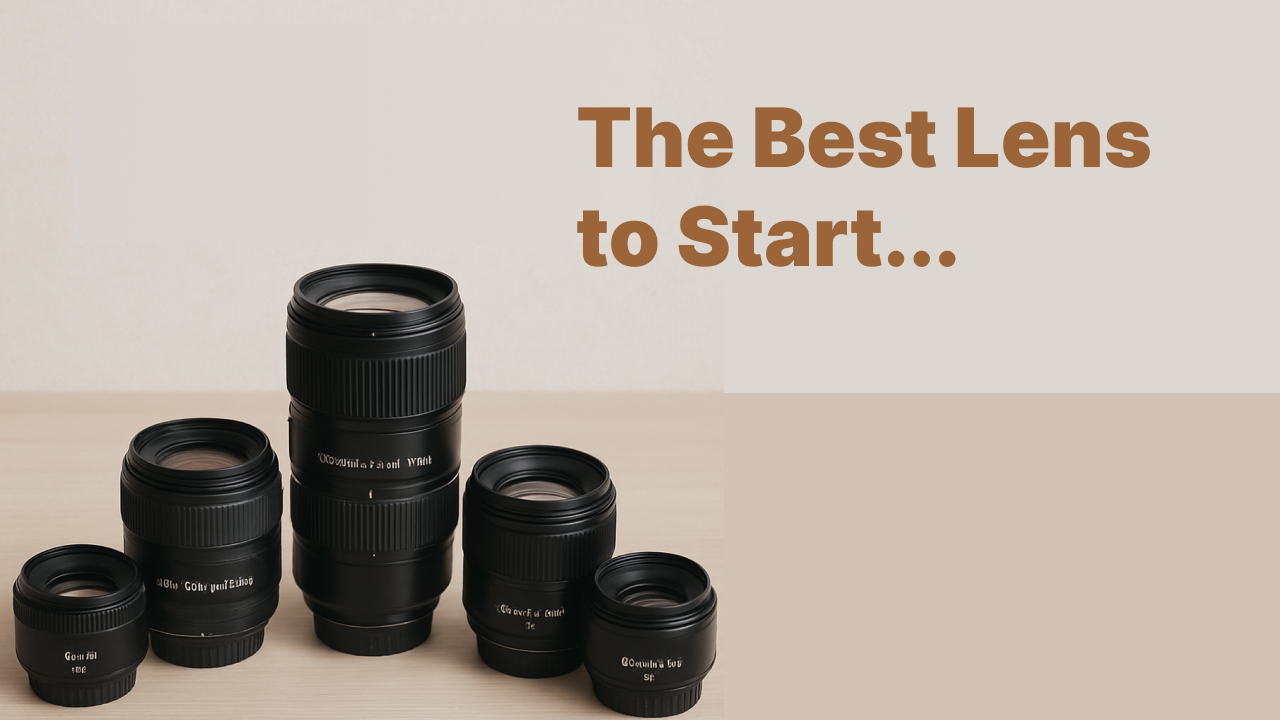
The 50mm f/1.8 prime lens is widely regarded as the best investment for beginner photographers. It offers superior low-light performance, sharp image quality, and professional background blur at a fraction of the cost of zoom lenses.
Introduction
Entering the world of photography requires navigating complex gear choices. Among the myriad of camera bodies and accessories, lens selection is the most critical factor in determining image quality. For beginners, the 50mm f/1.8 prime lens represents the ideal balance of performance, portability, and price.
This guide examines why this specific lens is the recommended starting point for photographers looking to upgrade from standard kit lenses without significant financial investment.
The Limitations of Kit Lenses
Most entry-level DSLR and mirrorless cameras are sold with a "kit lens," typically an 18-55mm zoom. While these optics are useful for learning basic camera operations, they possess inherent technical limitations that can hinder creative growth:
- Restricted Aperture: Kit lenses usually have a maximum variable aperture of f/3.5–5.6. This limits light intake, making low-light photography difficult without using a flash or high ISO settings.
- Deep Depth of Field: Due to the narrow aperture, achieving a shallow depth of field—where the subject is sharp and the background is blurred—is challenging.
- Optical Softness: To keep costs low, kit lenses often lack the sharpness and contrast found in dedicated prime lenses.
To produce images with a professional aesthetic, upgrading to a lens with better optical characteristics is necessary.
Why the 50mm f/1.8 is the Standard
The 50mm f/1.8 is frequently cited as the first upgrade a photographer should make. Its reputation is built on several key technical advantages:
1. Superior Low-Light Performance
The wide f/1.8 aperture allows approximately eight times more light to reach the sensor compared to a kit lens at f/5.6. This enables faster shutter speeds in dim environments, reducing motion blur and the need for digital noise reduction.
2. Professional Depth of Field
A wider aperture allows for significant background separation (bokeh). This isolates the subject, making the 50mm f/1.8 a standard choice for portraiture where focus retention on the eyes is paramount.
3. Optical Sharpness
Prime lenses (fixed focal length) generally contain fewer glass elements than zoom lenses, resulting in sharper images with less distortion and chromatic aberration.
4. Cost-Effectiveness
Manufacturing a 50mm lens is relatively simple compared to complex zoom mechanics. This efficiency translates to a lower retail price, often hovering around $125 USD for major brands like Canon and Nikon.
Maximizing Your Gear Budget
Investing in photography gear can be capital-intensive. Before purchasing new equipment, it is advisable to check for retail discounts and promotional codes.
Utilizing verified discounts can free up budget for other essential accessories such as tripods, memory cards, or lighting equipment.
The Educational Value of Prime Lenses
Beyond optical quality, a prime lens serves as an educational tool. Unlike a zoom lens, which allows the photographer to remain stationary, a fixed focal length requires physical movement to compose a shot. This constraint, often called "zooming with your feet," teaches critical skills in composition and perspective control.
Furthermore, the 50mm focal length on a full-frame sensor closely approximates the field of view of the human eye. This natural perspective makes it intuitive for beginners to frame shots in street and documentary photography.
Real-World Applications
Integrating a 50mm f/1.8 into a workflow yields immediate improvements in specific scenarios:
- Indoor Events: Capture candid moments without flash, preserving the natural ambiance of the room.
- Portraiture: Achieve soft, professional-grade backgrounds that eliminate distracting elements.
- Travel: The compact form factor reduces kit weight, making it easier to carry a camera for extended periods.
Conclusion
The 50mm f/1.8 prime lens offers a high return on investment for beginner photographers. It addresses the primary weaknesses of standard kit lenses by providing speed, sharpness, and creative control over depth of field. For anyone serious about elevating their photography, it remains the essential first step in building a professional lens kit.
For those ready to purchase, reviewing current offers is recommended to ensure the best possible price.
Further Reading
Understanding the mechanics of your camera is just as important as the lens you choose. Read our technical analysis on how shutter count impacts used camera value to make informed decisions when expanding your gear collection.
Remove Image Backgrounds Instantly!
Try BGFixer.com — fast, free AI background removal for all your photos.