Key Takeaways
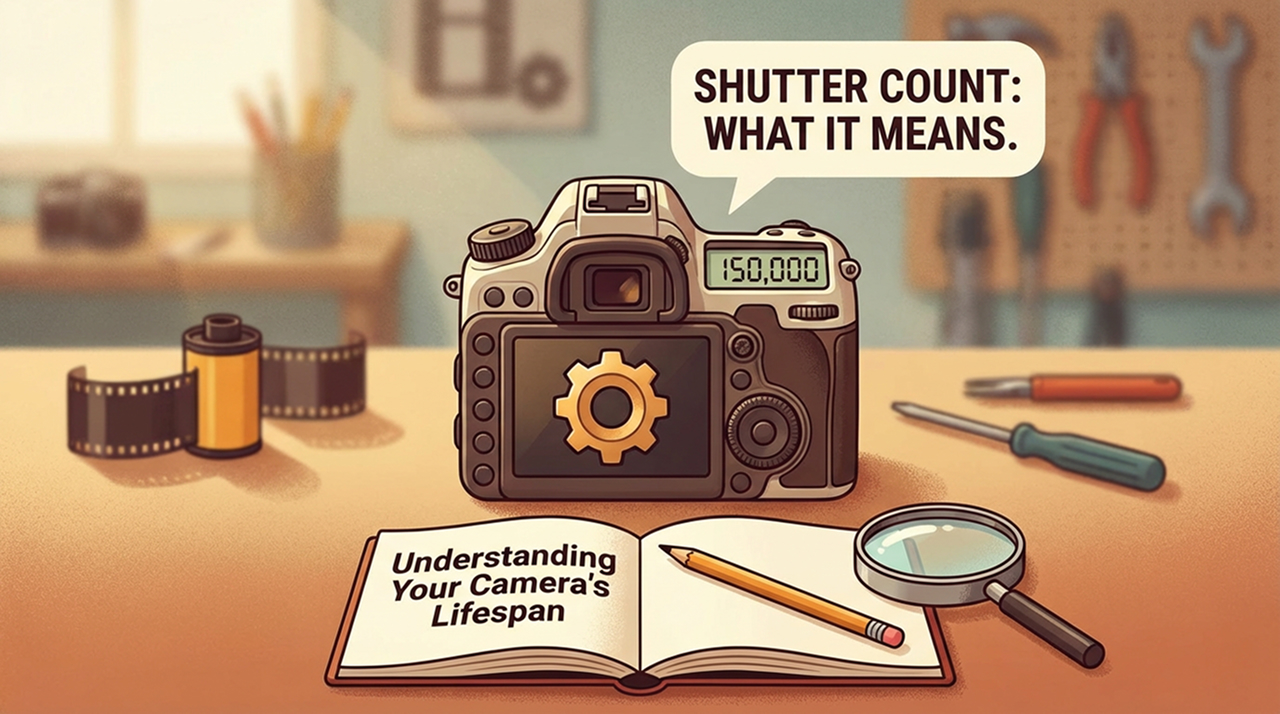
Shutter count is the standard metric for assessing used camera wear, functioning like a car's odometer. However, it is not the only indicator of longevity. This guide explores manufacturer ratings (MTBF), the impact of video usage on sensor health, and how to balance actuation count against price and physical condition.
Introduction
In the used camera market, "shutter count" is frequently the primary statistic used to negotiate price. Buyers often view a high shutter count as a warning sign of imminent failure, while sellers of low-count cameras command premiums.
While shutter count is a valuable data point, relying on it exclusively can lead to poor purchasing decisions. A camera is a complex system of mechanical and electronic components, and the shutter mechanism is just one point of potential failure.
Defining Shutter Count
Technically referred to as "shutter actuations," this metric represents the number of times the mechanical focal plane shutter has opened and closed to expose the sensor.
Manufacturers test their shutter mechanisms to establish a Mean Time Between Failures (MTBF). This rating allows us to categorize lifespan expectations:
- Entry-Level (e.g., Canon Rebel, Nikon D3xxx): Rated for ~100,000 actuations.
- Enthusiast (e.g., Canon 90D, Sony A7 III): Rated for ~150,000–200,000 actuations.
- Professional (e.g., Nikon Z9, Canon R3): Rated for 400,000–500,000+ actuations.
The Arguments for Prioritizing Shutter Count
1. Mechanical Degradation
The shutter is one of the few moving parts in a modern digital camera. Like a car engine, friction and physical stress accumulate over time. A camera nearing its rated limit is statistically more likely to suffer a stuck shutter blade or spring failure, rendering the camera unusable until repaired.
2. Resale Liquidity
Even if you are confident in a high-mileage camera's performance, the market might not be. Buying a camera with a high shutter count significantly reduces its future resale value and limits your pool of potential buyers.
Advertisement
Why Shutter Count Can Be Misleading
1. The "Video Mule" Problem
This is the most critical blind spot in modern camera buying. A camera used exclusively for 4K video production may have a shutter count of less than 5,000. However, the sensor may have thousands of hours of "power-on" time, leading to heat cycles that can degrade internal electronics and increase the likelihood of hot pixels.
Key Takeaway: A low shutter count does not guarantee a camera hasn't been heavily used.
2. Electronic Shutter Usage
Modern mirrorless cameras allow for "Silent Shooting" (Electronic Shutter). Images taken in this mode typically do not increment the mechanical shutter counter. A sports photographer could take 100,000 images electronically, putting zero wear on the mechanical shutter mechanism.
3. MTBF is an Average, Not a Deadline
The rated lifespan is a statistical average, not a self-destruct timer. Many professional cameras exceed 1,000,000 actuations on their original shutter, while others may fail at 20,000 due to factory defects or impact damage.
Holistic Evaluation: What Else to Check
When inspecting a used camera, the shutter count should be just one item on your checklist.
Sensor Inspection
To verify sensor health:
- Set the aperture to f/16 or f/22.
- Take a photo of a clear blue sky or a white wall.
- Inspect the image on a computer. Dark spots indicate dust (cleanable) or scratches (permanent damage).
Physical Interfaces
Check the tactile feedback of buttons and dials. "Mushy" buttons or loose dials often indicate heavy usage or exposure to moisture, regardless of what the shutter count says.
The Mount
Inspect the lens mount for excessive brassing (metal wear). A worn mount suggests the user frequently changed heavy lenses, potentially straining the mounting flange.
Conclusion
Shutter count matters, but it is not the sole determinant of value. It should be used to establish a baseline for pricing, not to disqualify a camera entirely.
- Buy Low Count if you plan to keep the camera for many years or resell it later.
- Consider High Count if the price is significantly discounted (30-40% below market) and the physical condition is excellent. The savings often outweigh the cost of a potential shutter replacement.
Before making an offer on any camera, always verify the seller's claims using an independent tool.
Advertisement
Check shutter count right from your phone
Inspecting a used camera in person? Copy one photo to your phone and get the true shutter count, a wear gauge and a plain-language verdict before you pay. Free, with no signup.
- Canon, Nikon, Sony, Fujifilm, Panasonic
- Saved check history
- Share results with buyers
Shooting gear listing photos?
Clean up the background first.
BGFixer.com removes photo backgrounds instantly with AI — free, no signup. Built for the same clean, no-nonsense listings your shutter count report gives you.